Safety doesn’t start with policy—it starts with conversation. And in high-risk environments like construction sites, manufacturing floors, or field operations, those conversations happen best in the form of toolbox talks. Yet one of the most common hurdles teams face isn’t resistance to safety—it’s simply not knowing what to talk about, or how to deliver it effectively. That’s where practical, ready-made toolbox talk topics free download resources come in.
These aren’t just time-savers. They’re force multipliers—turning inconsistent safety chats into structured, compliant, and engaging sessions that actually stick. This guide delivers not just a list of topics, but a working framework for how to use them, where to get them free, and how to avoid the common pitfalls that render safety talks useless.
Why Free Toolbox Talk Topics Matter
Toolbox talks—also known as safety moments, tailgate meetings, or safety huddles—are short, focused discussions on a specific safety topic. Typically lasting 10 to 15 minutes, they’re designed to reinforce safe behaviors, address emerging hazards, and promote a culture of accountability.
Yet too many supervisors treat them as box-ticking exercises. Generic warnings. Vague reminders. Outdated slides. The result? Disengaged crews, repeated incidents, and compliance gaps.
High-quality, downloadable toolbox talk topics solve this by offering:
- Consistency – Standardized content ensures all teams hear the same safety message.
- Compliance – Many resources align with OSHA, ANSI, or industry-specific regulations.
- Time savings – Supervisors spend less time preparing and more time leading.
- Engagement – Well-structured talks include discussion prompts, real-world examples, and visual cues.
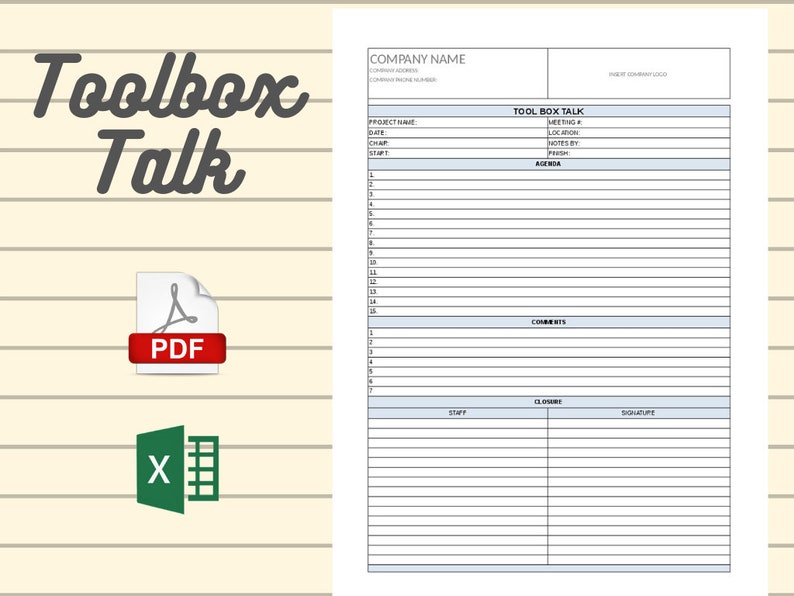
And the best part? You don’t need to pay for them. Numerous organizations offer toolbox talk topics free download in PDF, Word, or editable formats—no strings attached.
5 Real-World Toolbox Talk Topics
You Should Be Using
Not all topics are created equal. The strongest toolbox talks address both common and overlooked risks. Below are five high-impact, frequently needed topics—each with a practical example and key discussion points.
#### 1. Slips, Trips, and Falls - Why it matters: Still one of the leading causes of workplace injuries. - Example: A worker trips over an unmarked cable on a construction site, spraining their ankle. - Discussion points: - Housekeeping standards - Proper use of floor markings - Site-specific trip hazards (e.g., scaffolding gaps, wet surfaces)
#### 2. Hand Safety - Why it matters: Hands are involved in nearly every task—and are among the most injured body parts. - Example: A laborer removes gloves to “feel” a fitting, then cuts their palm on a sharp edge. - Discussion points: - PPE selection (cut-resistant vs. chemical-resistant) - “Line of fire” awareness - Tool inspection routines
![The 18 Best Construction Toolbox Talk Topics [Free Pdf Download] – FXMET](https://worksafetyqld.com/wp-content/uploads/2021/08/101-Toolbox-Talk-Ideas-for-the-Construction-Industry-Blog-Cover-980x551.png)
#### 3. Working at Heights - Why it matters: Fall protection failures lead to fatalities every year. - Example: A roofer uses a damaged harness lanyard because a replacement isn’t available. - Discussion points: - Harness inspection checklist - Anchor point standards - Rescue plans for fall incidents
#### 4. Hazard Communication (HazCom) - Why it matters: Misunderstood chemical labels or SDS sheets cause exposures. - Example: A worker mixes two cleaning agents, creating toxic fumes. - Discussion points: - GHS label elements - Location of SDS binders - Spill response steps
#### 5. Lockout/Tagout (LOTO) - Why it matters: Unexpected energy release causes severe injuries. - Example: A maintenance worker services a conveyor without locking out power—machine activates. - Discussion points: - Step-by-step LOTO procedures - Authorized vs. affected employees - Group lockout protocols
These topics work because they’re actionable. They don’t just state the risk—they prompt behavior change. And when available as free downloads, they become scalable across teams and shifts.
Where to Find Quality Toolbox Talk Topics Free Download
Not all free content is created equal. Some resources are thin, poorly formatted, or outdated. Others are professionally developed by safety experts, updated regularly, and designed for real-world use.
Here are five trusted sources offering toolbox talk topics free download—no email bait, no trials:
- OSHA.gov
- - Offers topic-specific guides and model programs.
- - Strengths: Regulatory alignment, authoritative.
- - Limitations: Less “ready-to-use” formatting; may require customization.
- NIOSH (National Institute for Occupational Safety and Health)
- - Provides research-backed safety talks, especially for healthcare, mining, and construction.
- - Strengths: Data-driven, includes risk assessment tools.
- - Formats: PDFs, infographics, presentation slides.
- Construction Industry Safety Initiative (CISI)
- - Industry-specific talks focused on construction hazards.
- - Strengths: Practical, site-tested content.
- - Bonus: Many include attendance sheets and sign-in logs.
- SafetyInfo.com
- - One of the oldest free safety libraries.
- - Offers over 200 toolbox talk templates.
- - Strengths: Searchable, printable, includes quizzes.
- - Note: Some content is dated—verify against current standards.
- WorkSafeBC (and similar provincial agencies)
- - Canada’s WorkSafeBC offers comprehensive, downloadable safety talks in multiple languages.
- - Strengths: Real-world scenarios, facilitator notes included.
- - Applicable internationally with minor adjustments.
These sources aren’t marketing tools—they’re public service resources. Their content is often reusable, editable, and designed for immediate deployment.
How to Customize Free Toolbox Talks for Your Site
Downloading a template is just the first step. For maximum impact, tailor each talk to your team’s environment.
3 Customization Tips:
- Insert Site-Specific Hazards
- - Example: If your site has frequent crane lifts, modify a “Struck-By” talk to include crane swing zones.
- - Add photos from your location to increase relevance.
- Localize Language and Culture
- - Avoid jargon. Use terms your crew actually uses.
- - If your team includes non-native speakers, simplify and pair with visuals.
- Add Real Incidents (Without Naming Names)
- - “Last week, we had a near-miss with a forklift at the loading dock…”
- - This transforms abstract risks into tangible lessons.
A generic talk on PPE becomes powerful when it includes: - A photo of your site’s PPE station - The correct respirator model number used on-site - A story about a close call involving improper eyewear
This level of detail turns compliance into conversation.
Common Mistakes That Ruin Toolbox Talks
Even the best free content fails when delivery falls apart. Avoid these traps:
- Reading verbatim – Monotone delivery kills engagement. Use the template as a guide, not a script.
- Holding talks in distracting environments – Don’t conduct a safety talk next to a running generator.
- Skipping attendance records – No record = no proof of training. Always sign in.
- Failing to act on feedback – If workers suggest a new topic, follow up. It builds trust.
- One-size-fits-all timing – A 12-hour night shift may need a different talk cadence than day crews.
The goal isn’t just to talk—it’s to influence behavior. And that requires presence, not just paperwork.
Making Toolbox Talks Part of Your Safety Workflow
Great safety programs don’t rely on annual training alone. They embed safety into daily rhythms.
Try this weekly workflow:
- Monday AM: Download or select the week’s topic (e.g., “Electrical Safety”).
- Tuesday PM: Review with supervisors. Customize with site examples.
- Wednesday–Friday: Deliver 10-minute talks at shift start. Rotate facilitators.
- Friday PM: Document attendance. File for audit purposes.
- Next week: Use feedback to pick the next topic.
Over time, this builds a library of documented safety engagement—critical for inspections, insurance, and incident investigations.
Final Thoughts: Use Free Resources, But Add Your Voice
Toolbox talk topics free download options are plentiful. But their value isn’t in the document—it’s in the delivery.
The best safety leaders don’t just distribute content. They personalize it. They connect it to real events. They listen as much as they speak.
So download the templates. Use the checklists. Leverage the free tools. But don’t stop there.
Stand in front of your crew. Make eye contact. Ask, “Has anyone seen this happen here?” That’s when safety shifts from compliance to culture.
Start today: pick one topic, tailor it, and talk. Not because OSHA says so—but because lives depend on it.
Frequently Asked Questions
What are toolbox talk topics? Toolbox talk topics are focused safety discussions on specific hazards or procedures, typically lasting 10–15 minutes, designed to reinforce safe work practices.
Are free toolbox talk downloads reliable? Yes, if sourced from reputable organizations like OSHA, NIOSH, or industry safety groups. Always verify content against current regulations.
Can I edit downloaded toolbox talks? Most free downloads are in PDF or Word format—editable versions allow customization for site-specific risks and language.
How often should toolbox talks be held? Weekly is ideal, but frequency depends on risk level. High-hazard sites may benefit from daily talks.
Do toolbox talks need to be documented? Yes. Attendance records and topic logs are essential for compliance and audit trails.
Should employees participate in toolbox talks? Absolutely. Encourage questions, stories, and feedback to increase engagement and retention.
Can toolbox talks reduce workplace incidents? When done consistently and meaningfully, yes. They raise hazard awareness and promote proactive safety behaviors.
FAQ
What should you look for in Toolbox Talk Topics Free Download – Practical Safety Guides? Focus on relevance, practical value, and how well the solution matches real user intent.
Is Toolbox Talk Topics Free Download – Practical Safety Guides suitable for beginners? That depends on the workflow, but a clear step-by-step approach usually makes it easier to start.
How do you compare options around Toolbox Talk Topics Free Download – Practical Safety Guides? Compare features, trust signals, limitations, pricing, and ease of implementation.
What mistakes should you avoid? Avoid generic choices, weak validation, and decisions based only on marketing claims.
What is the next best step? Shortlist the most relevant options, validate them quickly, and refine from real-world results.